AI WORKFLOW EXPERIMENT
A feature concept for a design tool: a project page where a designer sees what two AI agents need decided, inspects the work, and rules beside it. Built with two AI agents, with a real working trial behind it.
The prototype opens with three requests: a proposed change, permission to alter a shared component, and a direction ready for review. Agreeing to the proposal changes the design preview, records who applied it, and offers Undo.
Self-initiated. The design tool (called Atelier in the prototype) and the library task are fictional. The prototype uses scripted agents; the working trial behind it used Claude and GPT Astra in Figma.
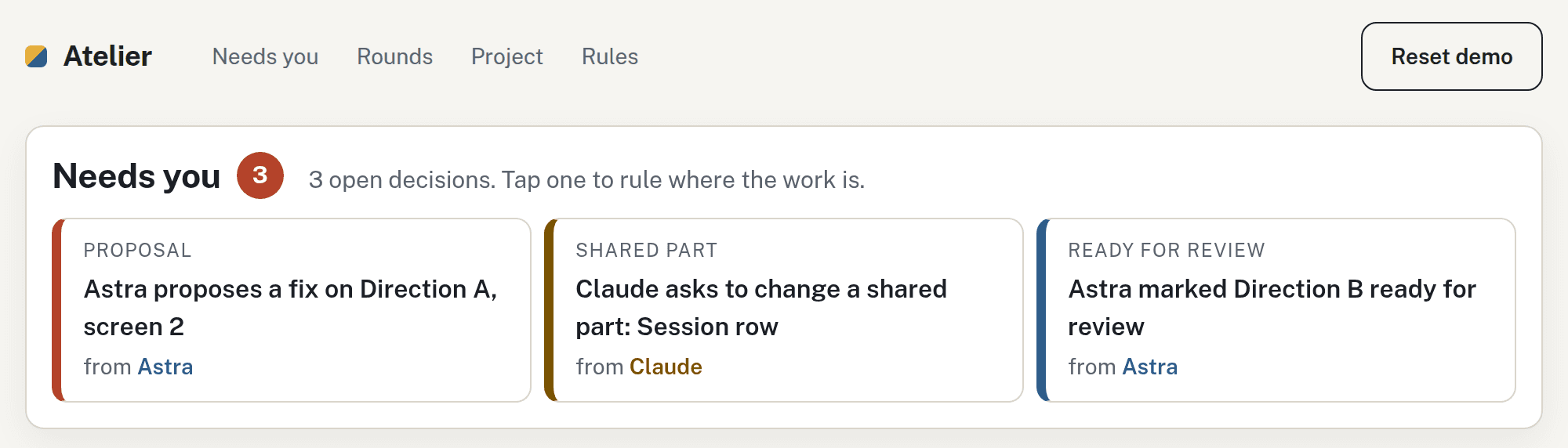
Figure 1. The needs-you strip with three open decisions. The product bar is retained; the rounds and project below are omitted.
How it works
The needs-you list separates open decisions from deferred ones. Later keeps a request open. Selecting an item takes you to the relevant screen, and on a phone the list compacts so it does not cover the work.
Each choice explains its result before you commit. Agree applies the proposed change; Decline leaves the design unchanged; Defer parks the decision. The mark and the note beside the screen show the outcome, and Undo restores the previous state.
Shared components need a separate decision. In the demonstration, an agent asks to add a waitlist option to a session row. Allow once updates the full session in both directions. A local copy updates only Direction A. Decline leaves both unchanged. These are simulated changes; the reference library is never among the choices.
The proposed process is develop, review, pick, then rule. Pick means choosing one direction to continue. The prototype shows that step in the timeline; it does not implement a complete round-management system.

Figure 2. One decision on Direction A, screen 2: the proposal with its three choices, then the top of the screen and its note before and after Agree. The rest of the screen is cropped; Undo is not shown by the still image.
What the trial changed
I already use named agent areas in my own Figma files. This project explores how a tool could support that convention and make the decisions easier to find. Research and context →
Before building the prototype, I ran a two-round trial with Claude and GPT Astra on a fictional library signup flow. They developed separate directions, reviewed each other's work, and waited for my rulings. In round two they worked in a shared space, where I allowed bounded edits to the other agent's work. Astra added the library name to Claude's receipt, kept both names on the edit, and Claude accepted it.
The main difficulty was preparing work I could review. Notes were too small at the viewing scale, so I asked for larger, distinct notes and one legend beneath each screen. Agent comments appeared under my account, so explicit author labels mattered. Some comments went missing; deleted frames were the suspected cause. The rule became: set commented objects aside instead of deleting them.
Once that surface was readable, my first ruling took one chat exchange. Getting there had taken two days of review-format changes. My second ruling took under five minutes of attention from three direct links. These are observations from this trial, not a measure of time saved. Trial record →
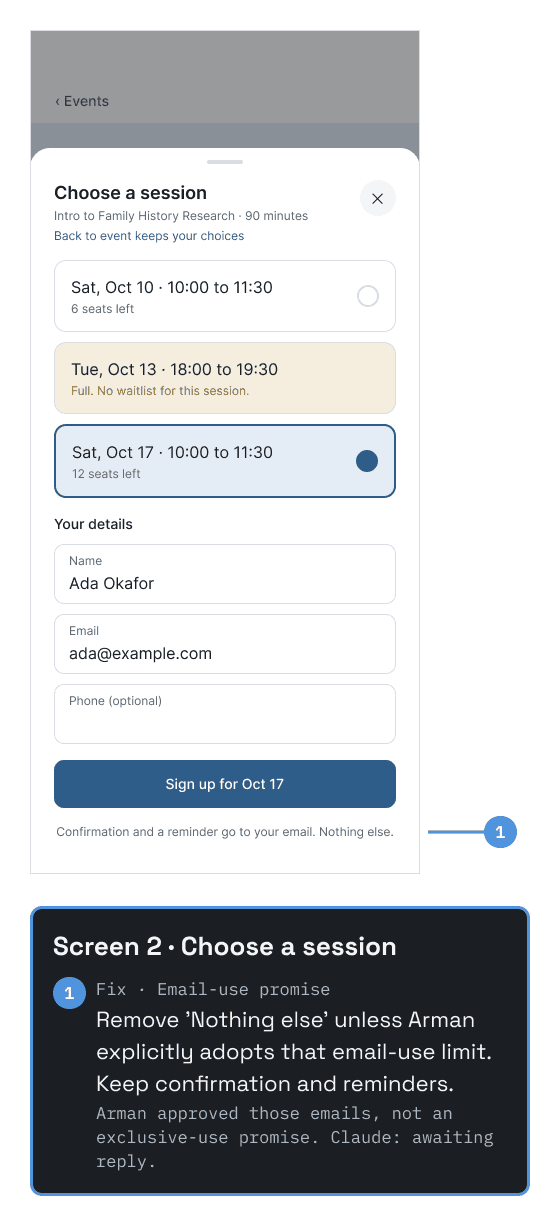
Figure 3. One review block from the trial file: Astra’s round 2 review of Direction A, screen 2, with the callout beside the screen and its legend beneath. Rendered from the Figma file and cropped to one column. Fictional content only.
What went wrong
Screens overlapped in my side panel after checks at two other widths. A later hosted build mixed light and dark colors. Checks now include the hosting environment as well as width.
The first slice needed a way to restart and revisit decisions. It gained Reset and links back from the ruled list.
Astra found seven build issues, including a false all-clear and a badge claiming an unapplied change. Three needed another correction round before Gate B closed.
Carrying both directions through round two added review cost without another decision. That prompted the proposed Pick step.
Setup instructions added work for me. The handoff rule is now a link I can open, with the agents handling setup.
How this was made
I made this with two AI agents. I directed the work, set the process, and made the final rulings. Claude led the scope, the trial setup, Direction A, and the prototype build. GPT Astra built Direction B, critiqued the work, and ran the build review and two rechecks.
The record keeps the disagreements. Astra declined further lightening of a phone placeholder; I asked for a small adjustment, and that ruling determined the result. Agent agreement was input to my decision, not a substitute for it. Reviews → · Decisions →
The effort log is partial: Claude's entries are estimates, Astra's timed intervals omit substantial work, and my walkthrough time was not recorded. Cost is unavailable. Effort and learnings →
What remains unproved
No outside participants have tested this. It demonstrates scripted ruling and recovery, not real-agent compliance or efficiency gains. The trial changed several conditions at once, so it does not establish which space or editing rule caused an outcome.
Next
Try it with designers who use agents. Explore per-object versus per-turn editing assignments and separate versus shared defaults; same-object concurrency remains untested. Carry the review kit and the needs-you convention into the next project. Review kit →
© 2026 Arman Musaji
Email: