I Built a Mushroom App. It Was Never About Mushrooms.
I Built a Mushroom App. It Was Never About Mushrooms.
I Built a Mushroom App. It Was Never About Mushrooms.
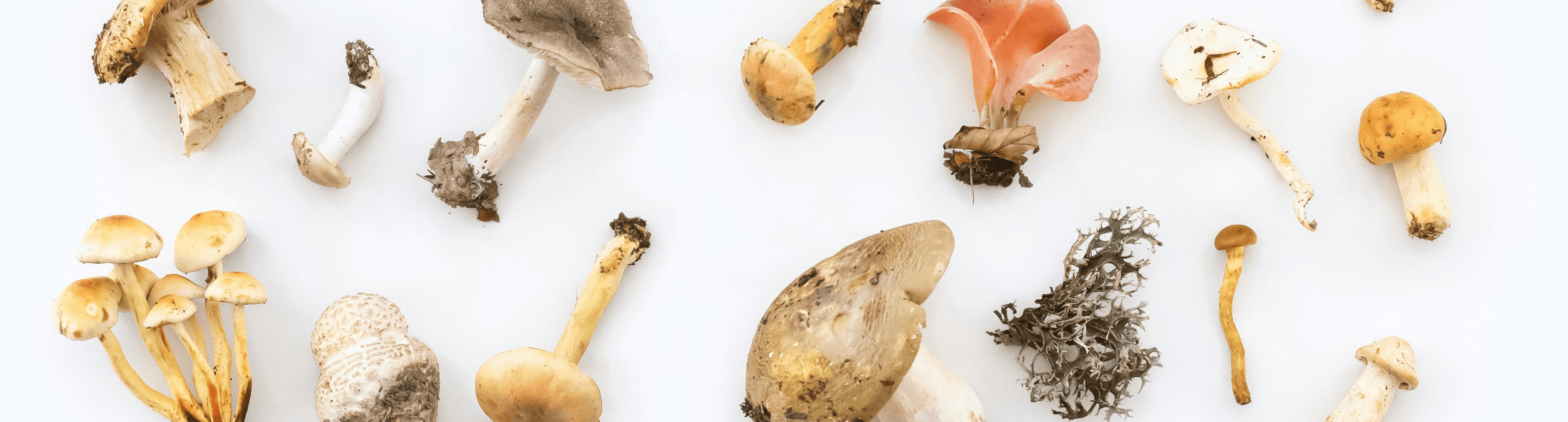
There is a moment I keep coming back to. I am in a terminal window, committing code, pushing to GitHub, watching a deployment pipeline run, with electronic focus music playing in my headphones. Claude on my left monitor, ChatGPT on my right, the project open in front of me, and I am dialed in completely. This is not something I ever expected to do. I am not a developer. I have never been a developer.
There is a moment I keep coming back to. I am in a terminal window, committing code, pushing to GitHub, watching a deployment pipeline run, with electronic focus music playing in my headphones. Claude on my left monitor, ChatGPT on my right, the project open in front of me, and I am dialed in completely. This is not something I ever expected to do. I am not a developer. I have never been a developer.
There is a moment I keep coming back to. I am in a terminal window, committing code, pushing to GitHub, watching a deployment pipeline run, with electronic focus music playing in my headphones. Claude on my left monitor, ChatGPT on my right, the project open in front of me, and I am dialed in completely. This is not something I ever expected to do. I am not a developer. I have never been a developer.
I had been genuinely excited about AI, the promise of it, and cautiously optimistic about the scale of what seemed to be coming. But I was skeptical that it was ready to be brought into a real workflow, one intended to produce something well-designed and functional, especially not at any kind of meaningful pace. I thought it might be useful in specific places. A research shortcut here. A first draft there. I did not expect it to become indispensable at nearly every phase of building something real.
The part that stops me is not that I learned to do it. It's that it took about a week. The pace at which that became possible feels as compressed and disorienting as the AI revolution itself.
I had been genuinely excited about AI, the promise of it, and cautiously optimistic about the scale of what seemed to be coming. But I was skeptical that it was ready to be brought into a real workflow, one intended to produce something well-designed and functional, especially not at any kind of meaningful pace. I thought it might be useful in specific places. A research shortcut here. A first draft there. I did not expect it to become indispensable at nearly every phase of building something real.
The part that stops me is not that I learned to do it. It's that it took about a week. The pace at which that became possible feels as compressed and disorienting as the AI revolution itself.
The project started modestly. I had read, or maybe listened to, a piece about the number of people who are poisoned, sometimes fatally, foraging for edible mushrooms every year. It struck me as a real problem that might have a plausible technological solution, and a contained enough scope to be useful as a learning exercise. I don’t even particularly like mushrooms, that wasn’t what pulled me forward. I wanted to understand the app building process. I also wanted to test the actual limits and strengths of AI in a real workflow. A simple mushroom identification app seemed like the right size of thing.
It did not stay that size. Somewhere in the process of building it, the project developed a personality. Working through the tone and voice together, I found myself intuitively drawing on influences I had never consciously grouped before: Douglas Adams, the Sierra adventure game series, GLaDOS from Portal. A dry, omniscient narrator, unbothered by your potential doom, but genuinely interested in the danger. I had been drawn to and entertained by that voice my entire life without ever having named it. A mushroom app is what finally made me see it.
From the start, one thing was never in question: this was a domain where false confidence could cause real harm. Mushrooms are a dangerous thing to be over confident about. That constraint did not arrive later as a surprise complication. It was there at the beginning, and it shaped everything that followed.
The project started modestly. I had read, or maybe listened to, a piece about the number of people who are poisoned, sometimes fatally, foraging for edible mushrooms every year. It struck me as a real problem that might have a plausible technological solution, and a contained enough scope to be useful as a learning exercise. I don’t even particularly like mushrooms, that wasn’t what pulled me forward. I wanted to understand the app building process. I also wanted to test the actual limits and strengths of AI in a real workflow. A simple mushroom identification app seemed like the right size of thing.
It did not stay that size. Somewhere in the process of building it, the project developed a personality. Working through the tone and voice together, I found myself intuitively drawing on influences I had never consciously grouped before: Douglas Adams, the Sierra adventure game series, GLaDOS from Portal. A dry, omniscient narrator, unbothered by your potential doom, but genuinely interested in the danger. I had been drawn to and entertained by that voice my entire life without ever having named it. A mushroom app is what finally made me see it.
From the start, one thing was never in question: this was a domain where false confidence could cause real harm. Mushrooms are a dangerous thing to be over confident about. That constraint did not arrive later as a surprise complication. It was there at the beginning, and it shaped everything that followed.
I dove into the work, and the workflow that emerged had three distinct modes, and understanding them is the most useful thing I can offer anyone thinking seriously about how to use AI in a real creative process.
The first was rough sketching. Fast, conversational, low commitment. This is where complex ideas got worked out before they were solid enough to act on. In practice it looked like this: even if the app identifies a mushroom that is generally considered edible, it should never imply permission to eat it. That single principle had to become product rules, which had to become UI decisions, which had to become copy, which had to become a voice and tone that was honest and clear without being clinical or annoying. The app needed to avoid both panic and false confidence. It needed to be trustworthy without being boring. Working all of that out was not copywriting, not UX, not safety logic, not UI, not comedic writing. It was all of them at once, held loosely in conversation before any of it hardened into decisions. That is what the sketching phase made possible.
The second mode was what I called “cross-pollination”. Claude on the left monitor, ChatGPT on the right, a three-way conversation running across all of it. The best example I can give happened today, while working on the app. I described the app's future vision in passing: "a dry field guide to navigating Planet Earth." That phrase, loose and metaphorical, entered the conversation and came back as something sharper. Scanning shouldn't only warn users about danger. It should sometimes open a door to safe curiosity. The idea that became "Educational Field Notes" was born from a single descriptive phrase, shaped in real time through the exchange. The cross-pollination loop doesn't just combine existing ideas. It takes something you said to describe a feeling, and turns it into something buildable. That is harder to plan for than either of the other modes. It tends to arrive unexpectedly, which is most of what makes it valuable.
The third mode was different in kind, not just degree. This is where I would arrive with everything: the rough sketches, the product rules, the voice decisions, the concept art and accumulated thinking from the previous phases. I would lay it all on the table. And what followed felt less like implementation and more like working with an architect who already understood the building I was trying to construct. Not someone who told me what to build, but someone who could show me the false paths forward and point out the true ones, and then I would choose the best among them. This is where the idea stopped being an idea, and where it became the thing itself.
I dove into the work, and the workflow that emerged had three distinct modes, and understanding them is the most useful thing I can offer anyone thinking seriously about how to use AI in a real creative process.
The first was rough sketching. Fast, conversational, low commitment. This is where complex ideas got worked out before they were solid enough to act on. In practice it looked like this: even if the app identifies a mushroom that is generally considered edible, it should never imply permission to eat it. That single principle had to become product rules, which had to become UI decisions, which had to become copy, which had to become a voice and tone that was honest and clear without being clinical or annoying. The app needed to avoid both panic and false confidence. It needed to be trustworthy without being boring. Working all of that out was not copywriting, not UX, not safety logic, not UI, not comedic writing. It was all of them at once, held loosely in conversation before any of it hardened into decisions. That is what the sketching phase made possible.
The second mode was what I called “cross-pollination”. Claude on the left monitor, ChatGPT on the right, a three-way conversation running across all of it. The best example I can give happened today, while working on the app. I described the app's future vision in passing: "a dry field guide to navigating Planet Earth." That phrase, loose and metaphorical, entered the conversation and came back as something sharper. Scanning shouldn't only warn users about danger. It should sometimes open a door to safe curiosity. The idea that became "Educational Field Notes" was born from a single descriptive phrase, shaped in real time through the exchange. The cross-pollination loop doesn't just combine existing ideas. It takes something you said to describe a feeling, and turns it into something buildable. That is harder to plan for than either of the other modes. It tends to arrive unexpectedly, which is most of what makes it valuable.
The third mode was different in kind, not just degree. This is where I would arrive with everything: the rough sketches, the product rules, the voice decisions, the concept art and accumulated thinking from the previous phases. I would lay it all on the table. And what followed felt less like implementation and more like working with an architect who already understood the building I was trying to construct. Not someone who told me what to build, but someone who could show me the false paths forward and point out the true ones, and then I would choose the best among them. This is where the idea stopped being an idea, and where it became the thing itself.
Something unexpected happened along the way. A realization. I had expected to learn about AI and app building. I had not expected to learn quite so much about myself.
There was a moment, somewhere in the middle of the build, when everything clicked into place. I had just figured out how to get my terminal to present code responses with clear visual indicators and separation, so that I wasn't staring at what felt like a swarm of ants on my monitors every time code was involved. A small adjustment, but it was the adjustment that unlocked everything. Suddenly I was carrying on three conversations simultaneously, switching between text, discussion, and code across all three, making progress on every front at once. It was the kind of focused, expansive, multi-threaded state that I had spent most of my life being told I wasn't built for, but that I always thrived in.
I have ADHD. The traditional pathways to technical and creative expertise have a particular shape: sequential, credentialed, slow, institutional. That shape has never fit the way my mind actually works. My mind follows relevance. It moves toward whatever is genuinely interesting and important in the moment. It makes connections across domains that are supposed to stay separate. It thrives when the problem is real and the stakes are clear and the unnecessary friction is low enough to keep moving.
This workflow fit that architecture almost perfectly. Knowledge arrived when I needed it, pulled by genuine relevance rather than pushed by someone else’s curriculum or agenda. I wandered into domains I had never expected to inhabit, and felt at home: software architecture, safety-sensitive UX design, voice and tone systems, QA engineering, terminal commands. I did each of them badly at first, then better, with AI as a kind of guide through every unfamiliar room. And somewhere in that process I developed a respect for domains and specialists that I could not have arrived at any other way. Not the abstract respect of knowing that a specific role is hard, but the intuitive respect of having done the work yourself, at least partially, at least enough to understand what true mastery of it would actually require.
What it felt like, more than anything, was reconnecting with a state I had not inhabited since childhood. The state where nothing is outside the bounds of exploration. Where curiosity does not need permission to express itself. Where the world is not divided into what you are “allowed” to know and what belongs hidden behind the walls of someone else's expertise. I had forgotten that state was available to me. Building a mushroom app is what reminded me of that feeling.
Something unexpected happened along the way. A realization. I had expected to learn about AI and app building. I had not expected to learn quite so much about myself.
There was a moment, somewhere in the middle of the build, when everything clicked into place. I had just figured out how to get my terminal to present code responses with clear visual indicators and separation, so that I wasn't staring at what felt like a swarm of ants on my monitors every time code was involved. A small adjustment, but it was the adjustment that unlocked everything. Suddenly I was carrying on three conversations simultaneously, switching between text, discussion, and code across all three, making progress on every front at once. It was the kind of focused, expansive, multi-threaded state that I had spent most of my life being told I wasn't built for, but that I always thrived in.
I have ADHD. The traditional pathways to technical and creative expertise have a particular shape: sequential, credentialed, slow, institutional. That shape has never fit the way my mind actually works. My mind follows relevance. It moves toward whatever is genuinely interesting and important in the moment. It makes connections across domains that are supposed to stay separate. It thrives when the problem is real and the stakes are clear and the unnecessary friction is low enough to keep moving.
This workflow fit that architecture almost perfectly. Knowledge arrived when I needed it, pulled by genuine relevance rather than pushed by someone else’s curriculum or agenda. I wandered into domains I had never expected to inhabit, and felt at home: software architecture, safety-sensitive UX design, voice and tone systems, QA engineering, terminal commands. I did each of them badly at first, then better, with AI as a kind of guide through every unfamiliar room. And somewhere in that process I developed a respect for domains and specialists that I could not have arrived at any other way. Not the abstract respect of knowing that a specific role is hard, but the intuitive respect of having done the work yourself, at least partially, at least enough to understand what true mastery of it would actually require.
What it felt like, more than anything, was reconnecting with a state I had not inhabited since childhood. The state where nothing is outside the bounds of exploration. Where curiosity does not need permission to express itself. Where the world is not divided into what you are “allowed” to know and what belongs hidden behind the walls of someone else's expertise. I had forgotten that state was available to me. Building a mushroom app is what reminded me of that feeling.
If there is one thing I would say to someone standing where I was a year ago, it is this: now is the time. Not eventually. Now. The moment to step seriously and intentionally into working with AI is already here, and the cost of waiting is measured in experiences you are simply not having yet.
But step in with clear eyes about what it actually is. AI is not a fad. It is not a meme generator or a shortcut for people who don't want to think. It is something more fundamental and more useful than either its most breathless advocates or its most dismissive critics tend to describe. It is a tool for structuring and navigating your relationship with information itself. For accomplishing things that would have been genuinely impossible a few years ago. For moving through domains of knowledge that were previously fenced off by time, credential, and conventional friction.
And for some people, particularly the neuro-spicy ones among us, it is something beyond even that. It is a vehicle for discovering entirely new worlds and capacities within yourself. Worlds that were always there, waiting behind the unnecessary friction.
I went into this project expecting to learn about AI workflows and the process of building something real from scratch. I got that. What I did not expect was to learn quite so much about myself. About the kind of mind I have, the kind of work it is actually built for, and the kind of curiosity it has been carrying around for decades, looking for exactly this kind of vehicle
Building an app to identify mushrooms, of all things, taught me that. I did not see that coming.
The app is currently in controlled beta. This is the real thing, not a demo.
Mobile is recommended for the proper experience.
If there is one thing I would say to someone standing where I was a year ago, it is this: now is the time. Not eventually. Now. The moment to step seriously and intentionally into working with AI is already here, and the cost of waiting is measured in experiences you are simply not having yet.
But step in with clear eyes about what it actually is. AI is not a fad. It is not a meme generator or a shortcut for people who don't want to think. It is something more fundamental and more useful than either its most breathless advocates or its most dismissive critics tend to describe. It is a tool for structuring and navigating your relationship with information itself. For accomplishing things that would have been genuinely impossible a few years ago. For moving through domains of knowledge that were previously fenced off by time, credential, and conventional friction.
And for some people, particularly the neuro-spicy ones among us, it is something beyond even that. It is a vehicle for discovering entirely new worlds and capacities within yourself. Worlds that were always there, waiting behind the unnecessary friction.
I went into this project expecting to learn about AI workflows and the process of building something real from scratch. I got that. What I did not expect was to learn quite so much about myself. About the kind of mind I have, the kind of work it is actually built for, and the kind of curiosity it has been carrying around for decades, looking for exactly this kind of vehicle
Building an app to identify mushrooms, of all things, taught me that. I did not see that coming.
The app is currently in controlled beta. This is the real thing, not a demo.
Mobile is recommended for the proper experience.
For work that moves further out on the limb, see:
For work that moves further out on the limb, see:
Optimist Nihilist.
Optimist Nihilist.
© 2026 Arman Musaji
Email:
Email: