
Case study
Acrylic
Designing discovery and licensing beyond the first MVP
Founding product designer · 2026
Role
Founding product designer
Timeline
2026
Scope
Buyer experience, IA, search, licensing, design system, handoff
Stage
Working MVP · Continued product design and implementation
Role
Founding product designer
Scope
Buyer experience, IA, search, licensing, design system, handoff
Timeline
2026
Stage
Working MVP · Continued product design and implementation
Beyond the first MVP
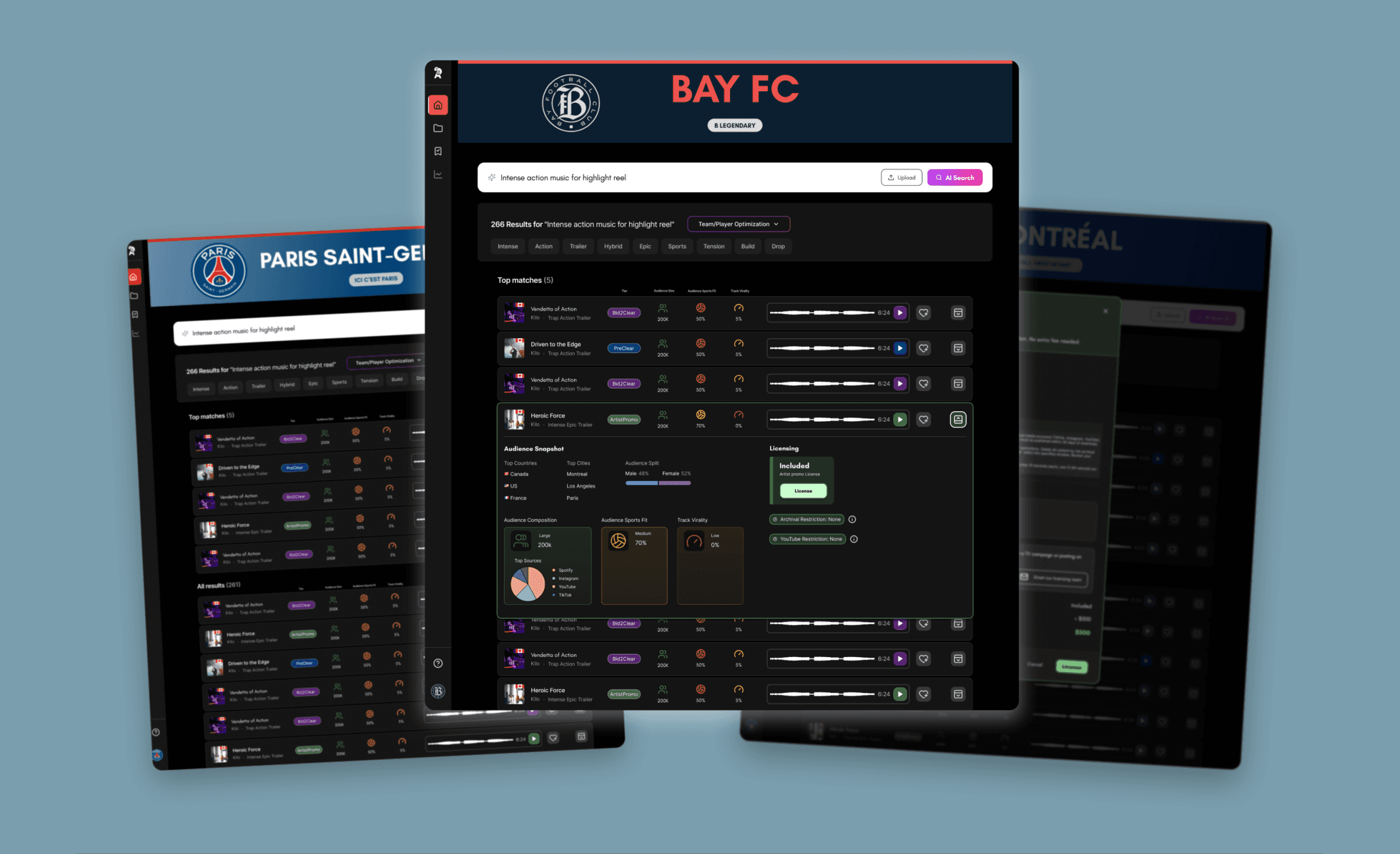
Acrylic helps sports teams and brands find, evaluate, and license music for their content. I joined while the buyer experience was still taking shape, working with the founders and engineers to turn an open product direction into flows and interfaces the team could build. The first working MVP brought search and licensing together. As the platform developed, the design problem expanded: buyers needed to express more precise search intent, understand a track’s permitted uses, and manage the work that continued after licensing.
Acrylic helps sports teams and brands find, evaluate, and license music for their content. I joined while the buyer experience was still taking shape, working with the founders and engineers to turn an open product direction into flows and interfaces the team could build. The first working MVP brought search and licensing together. As the platform developed, the design problem expanded: buyers needed to express more precise search intent, understand a track’s permitted uses, and manage the work that continued after licensing.
My contribution
I designed the buyer-side structure and interface, developed shared components, and worked with the team on search and licensing decisions. The founders contributed product direction and domain requirements; engineers implemented the platform and its integrations. My role was to turn those requirements and constraints into an understandable experience and detailed design guidance.
I designed the buyer-side structure and interface, developed shared components, and worked with the team on search and licensing decisions. The founders contributed product direction and domain requirements; engineers implemented the platform and its integrations. My role was to turn those requirements and constraints into an understandable experience and detailed design guidance.
Letting buyers be precise about what they want
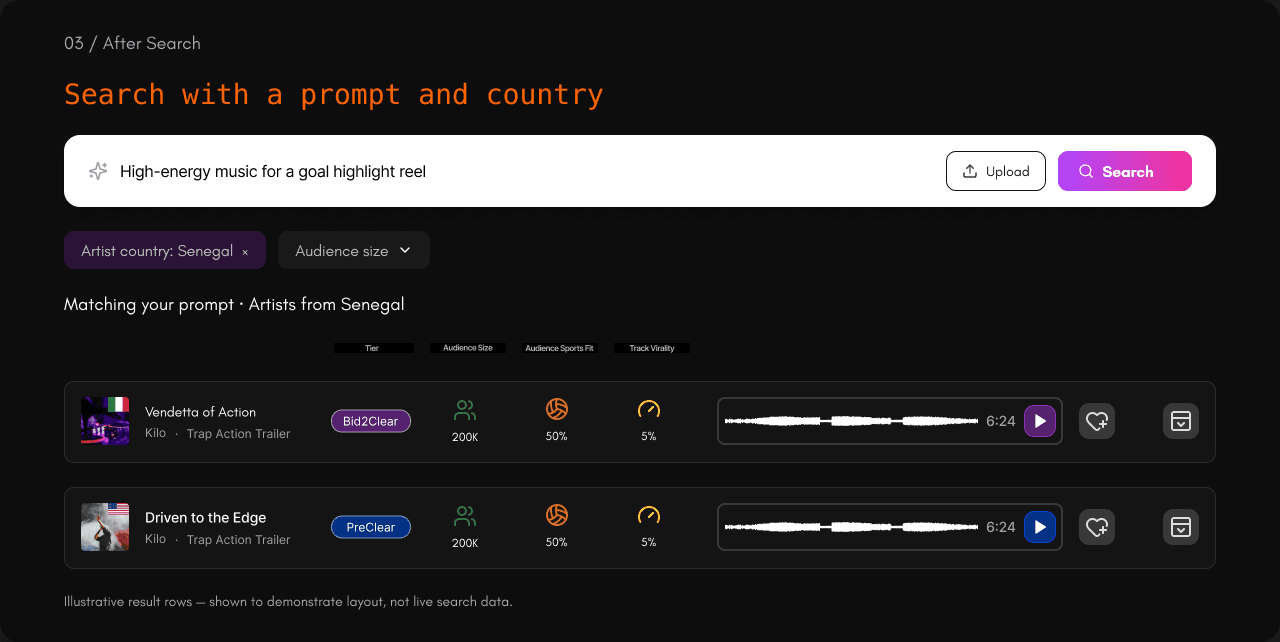
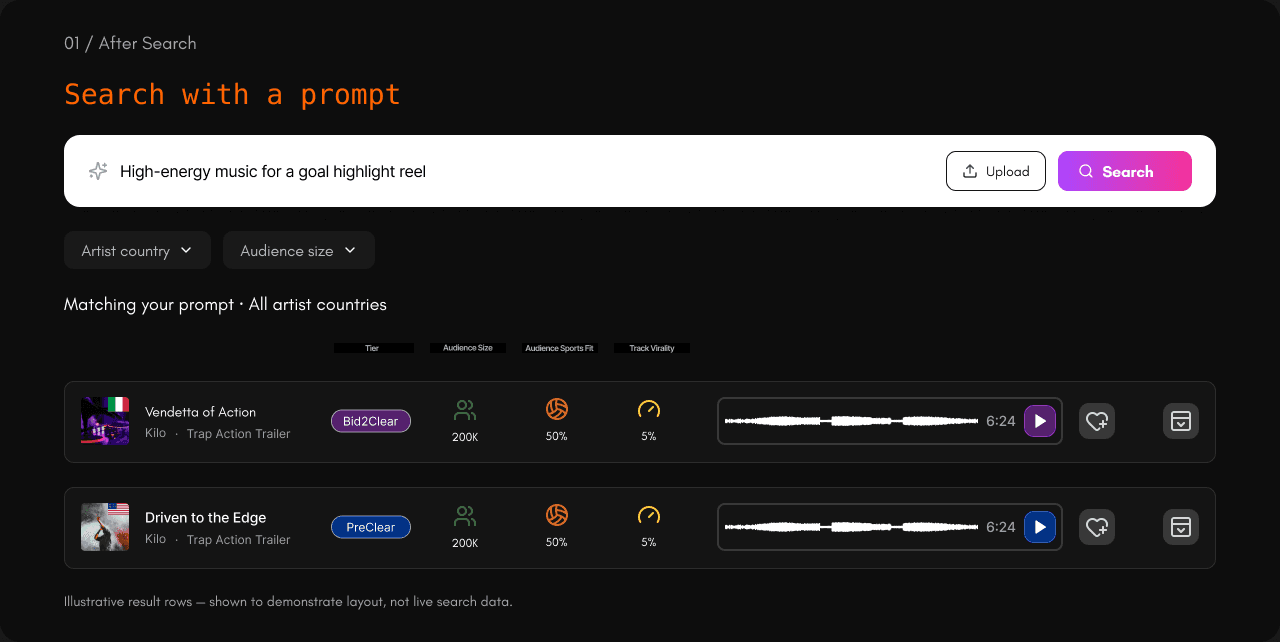
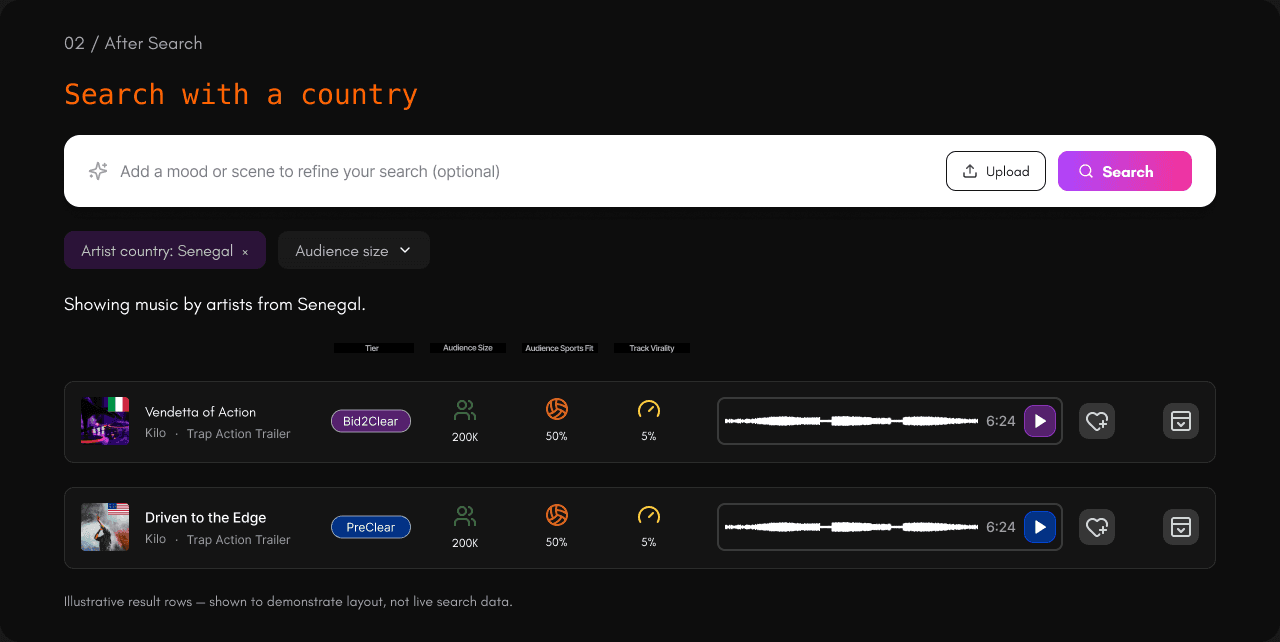
The search work exposed a difference between musical similarity and exact criteria. A request for music from a particular country could produce results that sounded relevant without matching the artist’s origin. The revised design keeps one search entry while making artist country an explicit optional choice. Buyers can start with a prompt, a country, or both. Result summaries show which conditions apply, and the country selector explains that it refers to where the artist is from. The board also explores guidance for vague prompts and reference links. These states offer ways to improve an input while allowing the search to continue. They are design explorations; their effect on search quality has not been established here.
The search work exposed a difference between musical similarity and exact criteria. A request for music from a particular country could produce results that sounded relevant without matching the artist’s origin. The revised design keeps one search entry while making artist country an explicit optional choice. Buyers can start with a prompt, a country, or both. Result summaries show which conditions apply, and the country selector explains that it refers to where the artist is from. The board also explores guidance for vague prompts and reference links. These states offer ways to improve an input while allowing the search to continue. They are design explorations; their effect on search quality has not been established here.
Design exploration: prompt and artist country can work together. The result summary makes both conditions visible; illustrated results are not evidence of live search performance. Open any image to view it full size in a new tab.
Design exploration: prompt and artist country can work together. The result summary makes both conditions visible; illustrated results are not evidence of live search performance. Open any image to view it full size in a new tab.
Supporting the work after licensing
Projects supports creative selection before licensing. The Licenses workspace gives buyers a place to manage licensed tracks, documents, published links, and upcoming renewals. The updated overview brings the next action close to each track. A request to add a published link sits with its deadline and action, while details remain available for terms, track information, and documents. Desktop and mobile designs retain the same responsibilities while adapting their layout. The design keeps three different things separate: a license’s permissions, the status of whitelisting, and the deadline for submitting published links. Adding a post does not extend its permissions, and a posting deadline is not the license’s expiration date.
Projects supports creative selection before licensing. The Licenses workspace gives buyers a place to manage licensed tracks, documents, published links, and upcoming renewals. The updated overview brings the next action close to each track. A request to add a published link sits with its deadline and action, while details remain available for terms, track information, and documents. Desktop and mobile designs retain the same responsibilities while adapting their layout. The design keeps three different things separate: a license’s permissions, the status of whitelisting, and the deadline for submitting published links. Adding a post does not extend its permissions, and a posting deadline is not the license’s expiration date.
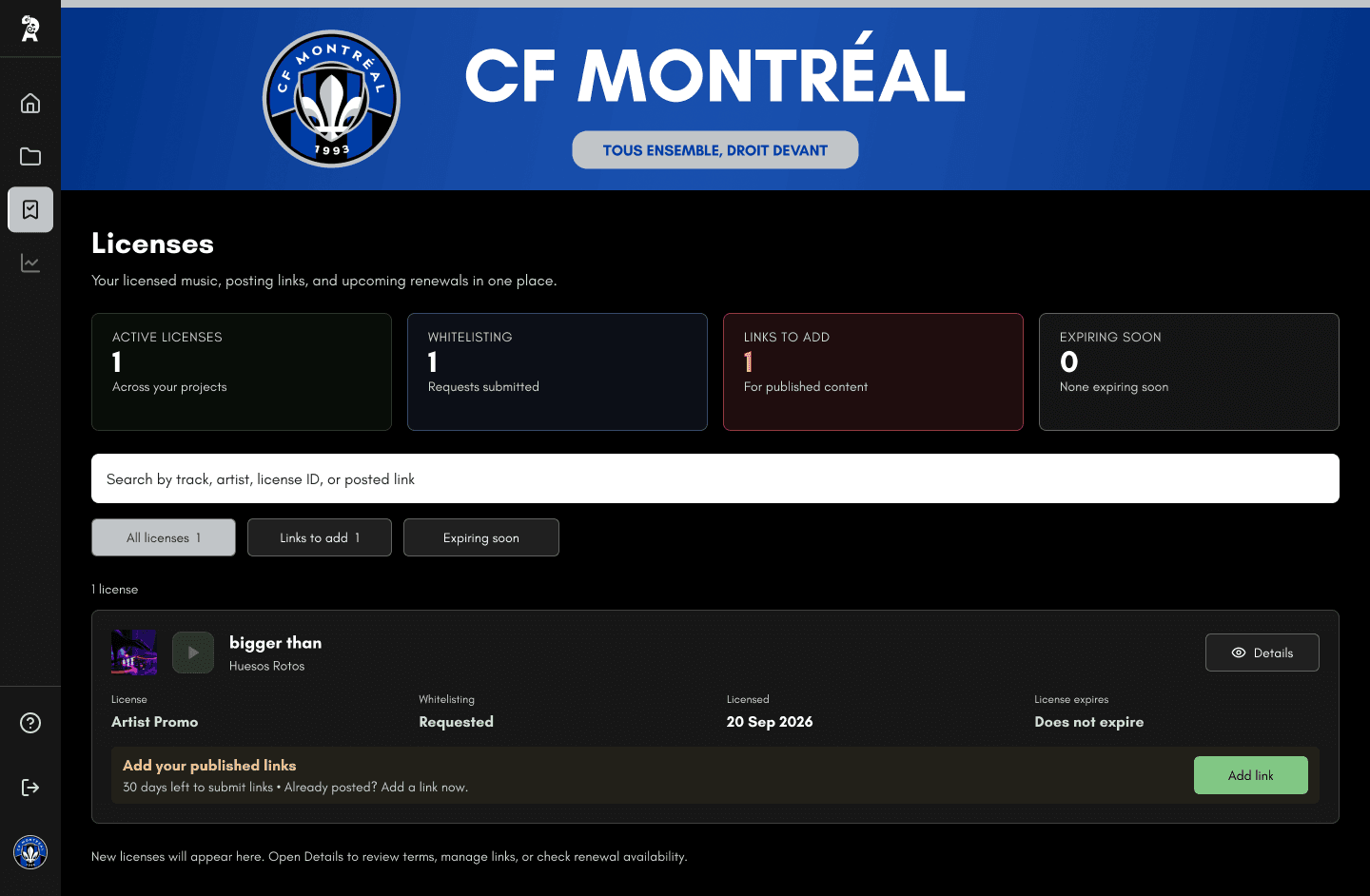
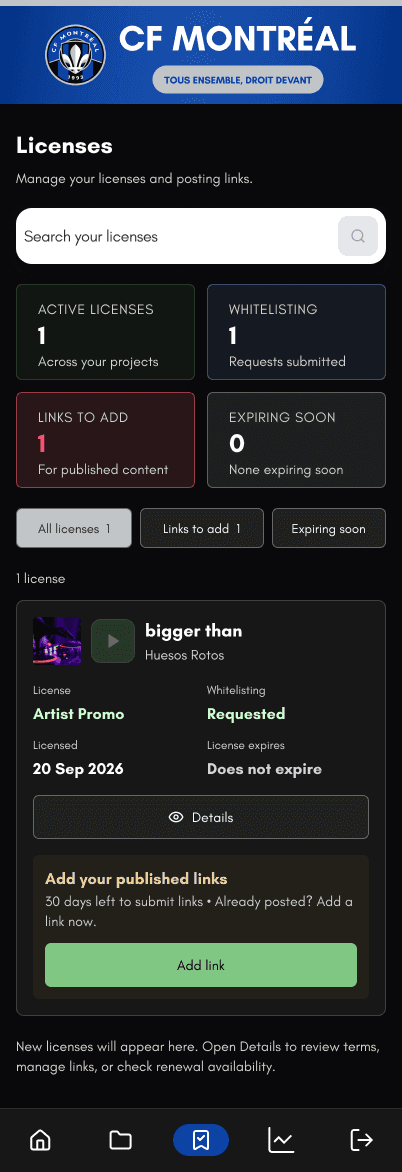
Desktop and mobile designs keep license permissions, whitelisting status, and published-link deadlines distinct. These layouts document design work; the current implementation status is unconfirmed. Open an image to view it full size in a new tab.
Desktop and mobile designs keep license permissions, whitelisting status, and published-link deadlines distinct. These layouts document design work; the current implementation status is unconfirmed. Open an image to view it full size in a new tab.
Designing the recovery path
The download flow distinguishes license creation from file delivery. If creating the license fails, the design leaves the track unlicensed and supports a retry. If creation succeeds but the file download fails, the license remains active and only file delivery is retried. That distinction is part of the handoff: recovery should not create a duplicate license. The renewal designs similarly account for included renewal, an additional fee, and cases where renewal is unavailable.
The download flow distinguishes license creation from file delivery. If creating the license fails, the design leaves the track unlicensed and supports a retry. If creation succeeds but the file download fails, the license remains active and only file delivery is retried. That distinction is part of the handoff: recovery should not create a duplicate license. The renewal designs similarly account for included renewal, an additional fee, and cases where renewal is unavailable.

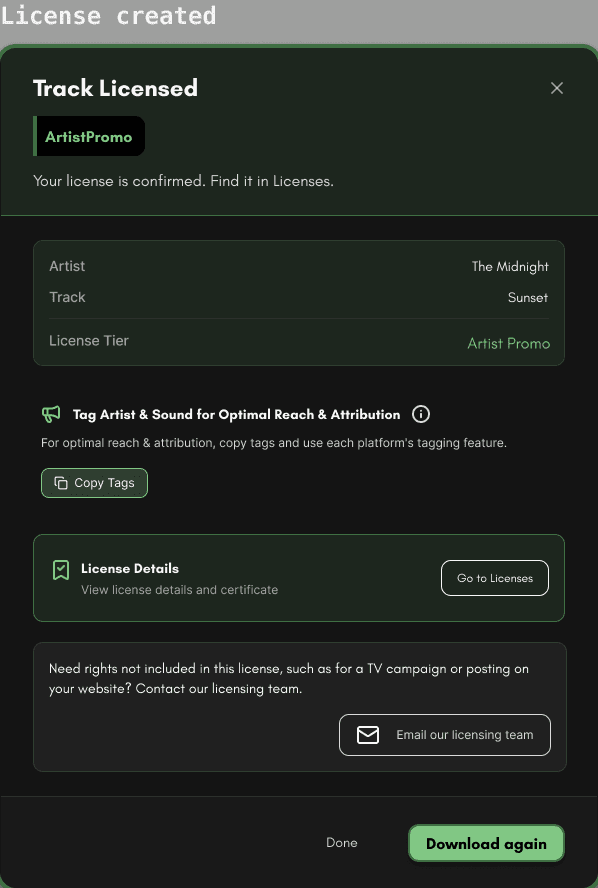
Design states: creation failure leaves the track unlicensed; creation success makes the license available. Retrying file delivery after success must preserve the active license rather than create another. Open an image to view it full size in a new tab.
Design states: creation failure leaves the track unlicensed; creation success makes the license available. Retrying file delivery after success must preserve the active license rather than create another. Open an image to view it full size in a new tab.
Extending discovery through audience data
The Performance direction adds a separate way to explore music through tracks, artists, audience information, and available uses. It reuses the product’s navigation and controls while giving data a more prominent role. The design makes limits visible. Artist origin is distinguished from listener location, combined platform audience counts are not presented as unique reach, and missing information is identified. The current mockups use sample data and illustrative eligibility states that require confirmation before implementation.
The Performance direction adds a separate way to explore music through tracks, artists, audience information, and available uses. It reuses the product’s navigation and controls while giving data a more prominent role. The design makes limits visible. Artist origin is distinguished from listener location, combined platform audience counts are not presented as unique reach, and missing information is identified. The current mockups use sample data and illustrative eligibility states that require confirmation before implementation.
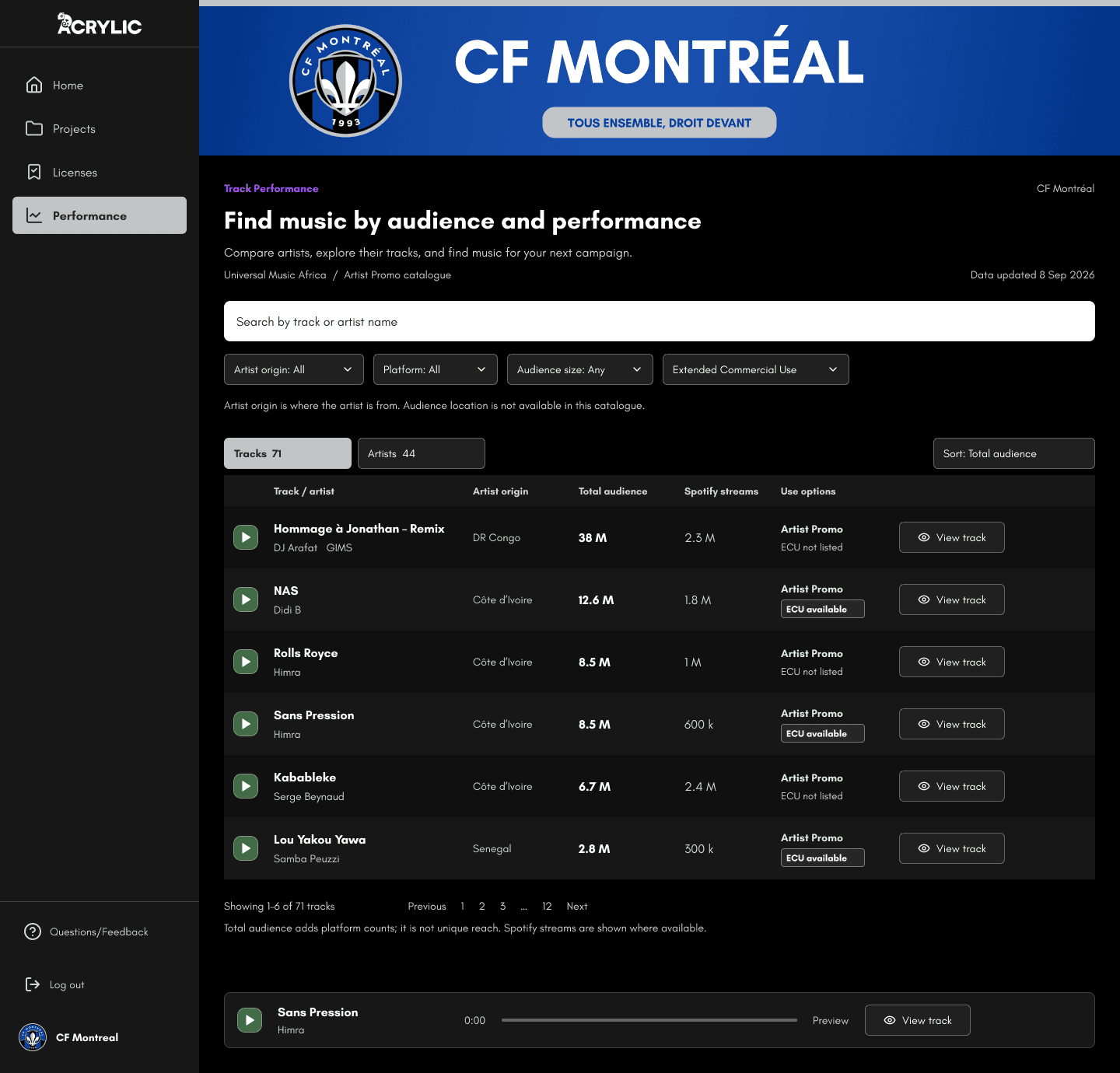
Design direction using sample data and illustrative eligibility. Artist origin differs from listener location, and combined platform audience counts do not establish unique reach. Open the image to view it full size in a new tab.
Design direction using sample data and illustrative eligibility. Artist origin differs from listener location, and combined platform audience counts do not establish unique reach. Open the image to view it full size in a new tab.
Progress and current boundary
The project progressed beyond a design-only MVP direction. A working build was demonstrated in April 2026, and video-search UI based on my designs was reviewed in production in July. Product work continued through search, licensing, and data-informed discovery. The recent boards document that design evolution. They do not establish that every depicted feature is live or that it improved conversion, licensing speed, or search success. Those outcomes require implementation and usage evidence.
The project progressed beyond a design-only MVP direction. A working build was demonstrated in April 2026, and video-search UI based on my designs was reviewed in production in July. Product work continued through search, licensing, and data-informed discovery. The recent boards document that design evolution. They do not establish that every depicted feature is live or that it improved conversion, licensing speed, or search success. Those outcomes require implementation and usage evidence.
© 2026 Arman Musaji
Email:
Email: