
Streaming · Social impact
Movikarma
Connecting independent films with opportunities to support their causes
Lead UX/UI Designer · 2018 · Six months
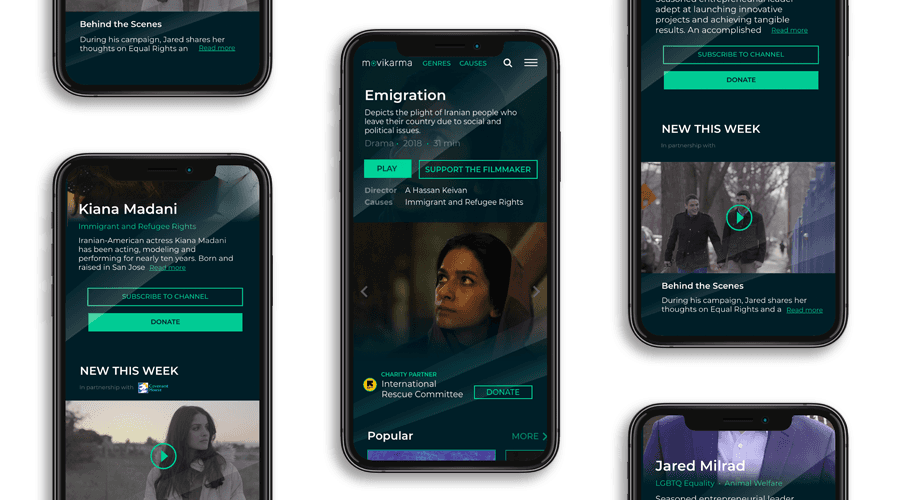
Connecting films with action
Movikarma’s premise was to connect cause-driven films with real-world action. The early concept needed a product structure, a consistent visual identity, and a clear way for a viewer to support the cause behind a film. I was the team’s only designer. I led the product’s information architecture, flows, interface, and branding, working with the founder, researcher, developer, and marketing lead toward a working MVP within six months.
Keeping viewing familiar
I used familiar browsing and playback patterns so viewers could understand how to find and watch a film. That left more room to introduce the product’s distinctive element: the connection between a film and its cause.
Bringing the cause into the flow
Support and donation actions were placed within the viewing experience and connected to each film’s charity partner. The design needed to make that opportunity visible without overwhelming the film itself. The walkthrough shows the intended sequence from discovery and subscription through viewing and supporting a cause.
Making a small team’s work go further
The product and pitch materials shared one visual direction. That let the team explain the concept through the experience it was building and kept product, marketing, and investor materials coherent.
Selected artifacts
A look at the MVP, from film discovery through the moment a viewer supports a cause.
A walkthrough of the working MVP: browsing cause-driven films, subscribing, then donating to a title's charity partner while watching. The watching-to-acting path the product was built around, end to end.

A film page pairs playback with the cause behind the title and a direct way to support it.
Result
The team delivered a working MVP within the six-month window and used it in investor and partnership conversations. My contribution established the experience and visual foundations for that product.